

Craft romantasy plot structure for dark fantasy magic
TL;DR:
- Seamlessly blending romance and fantasy is essential, with love fueling magic and vice versa.
- Dark romantasy emphasizes gothic atmosphere, moral ambiguity, and supernatural danger, requiring careful structure.
- Effective pacing, intertwined conflict, and worldbuilding obstacles create intense emotional and supernatural stakes.
So many dark romantasy stories have this frustrating habit of letting romance and fantasy fight each other for the spotlight instead of dancing together. One chapter feels like pure swooning, and the next forgets the love story entirely while monsters rampage. As romance and fantasy must be seamlessly blended so that removing the romance collapses the entire plot, you can’t treat them as separate ingredients you fold together at the end. This guide walks you through the real mechanics of building a romantasy story where magic feeds the passion and passion feeds the magic, so both land with maximum emotional punch.
Key Takeaways
| Point | Details |
|---|---|
| Romantasy basics | Blend romance and fantasy so each elevates the stakes and story progression. |
| Three-act structure | Follow a structure where romance and fantasy arcs intertwine from setup to resolution. |
| Integrated worldbuilding | Let magical or supernatural obstacles intensify romantic drama and plot conflicts. |
| Pacing mastery | Alternate emotional and action beats to build tension and ensure satisfying payoffs. |
| Dare to innovate | Don’t be afraid to break conventions—unexpected twists make your story unforgettable. |
Understand core romantasy elements
With the stakes set, let’s clarify what really defines a balanced romantasy story, because people mix up the terminology all the time and it causes serious plotting headaches.
Romantasy means romance is the primary engine. The love story is the point, and everything else, including the magic system, the world, and the villain’s grand scheme, exists to pressure-test that relationship. Crucially, a true romantasy requires an HEA or HFN ending (Happily Ever After or Happy For Now), while a romantic fantasy, which puts the world-building first, can end in tragedy or ambiguity. That distinction matters enormously when you’re plotting, because your readers come in with different emotional contracts depending on which genre label you’re selling under.
Dark romantasy specifically leans into gothic atmosphere, moral ambiguity, and supernatural dread. Think cursed bloodlines, forbidden gods, shadowy bargains, and love interests who genuinely could turn dangerous. The Scottish Highland romance tradition offers a compelling older model here, with its wild landscapes functioning as emotional mirrors for lovers torn between loyalty and desire. Dark romantasy borrows that same trick but cranks up the supernatural voltage.
The tropes that consistently resonate with readers in this space are enemies-to-lovers, forbidden love, slow burn, and fated-but-fighting-it connections. These aren’t lazy shortcuts. They work because character-driven plots prioritize deeply flawed, magnetic characters whose chemistry creates genuine narrative suspense. Will they or won’t they? And if they do, what breaks apart because of it?
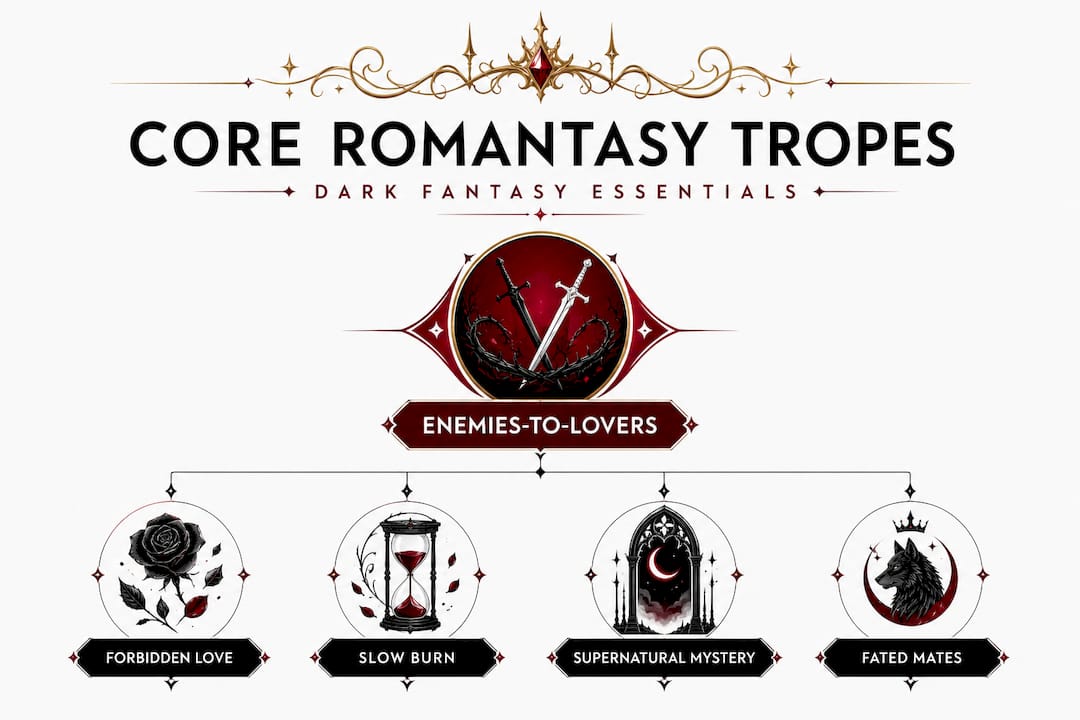
Here’s a quick comparison so you can see where your story actually lives:
| Feature | Romantasy | Romantic fantasy |
|---|---|---|
| Primary focus | Romance arc | Fantasy world/plot |
| HEA/HFN required? | Yes, always | No, can be tragic |
| Emotional core | Love relationship | Adventure or quest |
| Example tropes | Enemies-to-lovers, fated mates | Hero’s journey with romance subplot |
| Reader expectation | Emotional satisfaction | World resolution |
Explore how these dynamics play out in our romantasy ebooks, or check out Tribute as a strong example of dark romantasy that walks this line beautifully.
Pro Tip: Before you plot a single twist, decide which contract you’re writing under. If you promise romantasy but deliver a tragic ending, readers won’t just be disappointed, they’ll feel genuinely betrayed. Know your ending first, then build backward.
Map the intertwined three-act structure
Now that you know what makes romantasy unique, here’s how to build its critical skeleton. The good news is you don’t need to invent a new framework. The three-act structure works perfectly, you just need to run two tracks simultaneously through it: the romance arc and the fantasy arc.
Romantasy structure follows a three-act framework where romance and fantasy beats are intertwined throughout, with each act deliberately balancing romantic tension against rising supernatural stakes. Think of it less like braiding two separate ropes and more like weaving threads into one piece of fabric. You can’t yank one out without destroying the whole thing.
Here’s how that looks in practice:
| Act | Romance beat | Fantasy beat | Example moment |
|---|---|---|---|
| Act 1 (opening ~25%) | Meet, clash, reluctant connection | World threat introduced, personal stakes revealed | Two rivals discover they must work together against a curse |
| Act 2a (next ~25%) | Growing trust, first vulnerability | Complications deepen, allies and enemies emerge | Forced proximity during a dangerous magical mission |
| Act 2b (next ~25%) | Emotional crisis, black moment | Stakes escalate, betrayal or loss hits hard | The love interest’s dark secret threatens everything |
| Act 3 (final ~25%) | Reconciliation, emotional resolution | Final confrontation, world threat resolved | They face the darkness together and come out changed |
Notice how each column feeds the other. The emotional black moment in Act 2b isn’t just about the relationship crumbling. It also coincides with the fantasy stakes hitting their peak. That doubling of pain is what makes dark romantasy feel so intensely satisfying when the resolution finally arrives.
Step by step, here’s how to execute this:
First, establish both conflicts in Act 1. Don’t set up the romance and then introduce the fantasy problem later. Both need to appear together, ideally within the same scenes, so readers immediately feel the pull of two converging forces.

Second, use Act 2 to escalate both tracks in parallel. Every romantic revelation should complicate the fantasy situation, and every supernatural development should put new pressure on the relationship. If you write three consecutive chapters of pure romance without any fantasy stakes moving, you’ve stalled.
Third, let the darkest moment hit both arcs at once in the second half of Act 2. The relationship should feel genuinely lost right when the world threat feels genuinely unsurvivable. This is where readers become obsessed.
Fourth, resolve both arcs in Act 3, but make sure the fantasy resolution only becomes possible because of the romantic resolution. That causal link is what separates great romantasy from a story that just happens to have magic and kissing in it.
Weave romance and fantasy for maximal stakes
But structure alone won’t create dark magic. Here’s how to entwine world and romance so they genuinely spark against each other.
The secret is understanding that your worldbuilding should actively create romantic obstacles, not just decorate the backdrop. Worldbuilding serves the romance by creating obstacles like magical conflicts, dark prophecies, and faction oppositions that amplify tension between your leads. Every rule of your magic system, every political alliance in your world, every cursed bloodline or forbidden deity should exert real pressure on whether your protagonists can actually be together.
Classic obstacles that work beautifully in dark and gothic settings include magical boundaries that prevent contact or cause pain during intimacy, prophecies that name one lover as the other’s destruction, faction loyalty conflicts where love means betrayal to everything a character has sworn to protect, and supernatural transformations that make a character fear what they’ll become if they let themselves feel too deeply.
“Intimacy carries consequences tied to world stakes.”
That quote should be pinned above your writing desk. When your protagonists get closer, something in the world should shift, tighten, or crack. A stolen kiss in a cursed tower shouldn’t just be romantic. It should accidentally break a ward, alert an enemy, or trigger a prophecy. Removing the romance collapses the plot in the best romantasy because the love story is structurally load-bearing, not decorative.
Think about how intimacy raises world stakes in concrete terms. Your protagonists sharing a secret creates an alliance neither faction can know about. A moment of emotional vulnerability reveals information a villain can exploit. A declaration of love forces a choice between personal happiness and the world’s survival. These aren’t contrived plot devices. They’re the natural result of building a world where your characters’ feelings have real consequences.
Browse our full romantasy novel collection to see how authors integrate world consequences with romantic payoff in every chapter.
Pro Tip: Write scenes that serve a dual purpose. A battle scene should also reveal something emotionally true about the relationship, like whether one character would sacrifice themselves for the other, or whether trust survives under pressure. If a scene only advances one track, ask whether it’s actually earning its place.
Control pacing and tension for ultimate payoff
With world and heart entwined, let’s make sure your story’s rhythm actually matches its passion. Pacing is where a lot of otherwise well-structured romantasy falls apart, usually because writers linger too long in emotional beats and forget to ratchet up the supernatural tension, or they pile on action so fast the romance never gets room to breathe.
Effective pacing alternates romantic and plot scenes using cliffhangers and intentional slow-burn delays to build toward an earned payoff. The key word there is alternates. You’re running a rhythm, like music, not a single sustained note.
Here’s a step-by-step approach to pacing your romantasy:
Start by mapping your beats before you draft. Know roughly where your major romantic moments fall (first touch, first real vulnerability, black moment, reconciliation) and where your major fantasy moments fall (threat revealed, first real danger, devastating loss, final confrontation). Then look at whether they’re evenly distributed or clumped.
Next, use short scenes for high-tension chapters. When the action is peaking or the emotional stakes are at their most unbearable, shorter scenes keep the pace urgent. Long, languid paragraphs signal safety to readers, even if terrible things are happening. If you want readers to feel panic, keep the sentences tight and the chapters brief.
Then deliberately slow down for key emotional or magical reveals. The moment your protagonist realizes they’re in love, or the moment the true nature of the curse is exposed, these deserve breathing room. Don’t rush the moments readers have been waiting two hundred pages for.
Use cliffhangers strategically at chapter endings, but vary what kind of cliffhanger you deploy. Some chapters should end on romantic tension (unresolved feelings, interrupted moments, confessions that go unanswered). Others should end on fantasy danger (a threat appearing, a betrayal revealed, a magical consequence triggered). Mixing the types keeps readers genuinely uncertain about which crisis will hit next.
The slow burn is your most powerful pacing tool in dark romantasy. When you intentionally delay the romantic resolution through misunderstandings, magical interference, external danger, or a character’s own emotional walls, you build reader investment to almost uncomfortable levels. Every near-miss pays dividends later. Just make sure the delay feels earned and not like the author is stalling.
Pro Tip: Read your tension curve out loud. If you find yourself bored narrating three consecutive scenes of the same emotional register, your readers will absolutely feel it too. Alternate the emotional temperature the way a great playlist alternates energy levels.
Perspective: Why the best romantasy breaks the expected rules
Now, let’s look deeper: Is following the structure enough, or is rule-breaking essential for a truly memorable romantasy?
Here’s our honest take. The three-act framework and the dual-arc approach are genuine craft foundations, and we stand by every bit of advice above. But the romantasy titles that actually achieve cult status, the ones readers tattoo on their arms and reread annually, almost always break or subvert at least one major expectation.
Some readers and writers define romantasy as a true equal blend of both genres, which is genuinely harder to execute than romance-primary, and the disagreement itself tells you something important: there’s no single correct formula. The genre is still being invented in real time. That’s an invitation, not a constraint.
The romantasy boom is deeply tied to BookTok’s appetite for female-gaze storytelling with genuine emotional payoff. But chasing what performed well on BookTok six months ago is how you write something that feels instantly dated. The writers who pushed the genre forward did so by understanding what readers emotionally needed, then finding a surprising way to deliver it.
So we’d encourage you to use structure as your launchpad. Know the rules. Then ask yourself where the darkness in your specific story demands something different. Maybe your HEA is hard-won and genuinely costs something. Maybe you invert a trope by making the “dangerous” love interest the most emotionally honest character in the book. Maybe the fantasy world’s resolution isn’t triumphant but quietly devastating, and that feels true to your story’s heart. These innovative romantasy reads show what’s possible when authors trust their instincts inside a solid framework.
Structure keeps you from getting lost. Creative courage is what makes readers remember you.
Find your next dark romantasy obsession
And if you’re craving to experience expertly structured romantasy first-hand, these stories await. We’ve spent real time thinking about everything discussed in this article, dual arcs, intertwined stakes, slow-burn payoffs, and we’ve channeled it into the dark fantasy and gothic fiction you’ll find at SandDancer Publications.

Our romantasy and dark fantasy ebook collection features stories where the supernatural and the romantic are genuinely inseparable, the way they should be. Whether you want to start with a standalone gothic romance or sink into a series with layered world-building and magnetic characters, we’ve got something designed to scratch exactly that itch. Grab an instant download and let the dark magic do its thing. 🖤
Frequently asked questions
What is the difference between romantasy and romantic fantasy?
Romantasy is romance-first and guarantees a happy ending or happy-for-now resolution, while romantic fantasy places the fantasy world front and center and can end in tragedy or ambiguity without breaking any genre promises.
How do you balance romance and fantasy arcs?
Align your pivotal romantic moments with your key fantasy events so both tracks raise the stakes together. Scenes should serve dual purposes, like a battle that simultaneously tests emotional trust, so neither element ever pulls the story in opposite directions.
Do all romantasy stories require a happily ever after (HEA)?
True romantasy requires an HEA or HFN ending as a core genre promise, but romantic fantasy has more freedom to end on bittersweet or open terms without disappointing its audience.
Which tropes are most popular in dark romantasy?
Enemies-to-lovers, slow-burn romance, forbidden love, and fated bonds top the list. These work because deeply flawed characters with real chemistry create tension that the supernatural stakes can then amplify rather than replace.
Recommended
- SandDancer Publications – SandDancer Books
- House of Cards | Urban Fantasy Las Vegas Vampire Shapeshifter Ebook – SandDancer Books
- Gothika Novel #2 - Blood Tithe | Dark Fantasy Horror Ebook Series – SandDancer Books
- Romantasy Ebooks – Dark Romance Fantasy Titles | SandDancer Books
- Romance or Erotica? Understanding the Genre Divide