

Step-by-step guide to inclusive dark fantasy storytelling
TL;DR:
- Inclusive dark fantasy incorporates genuine diverse characters, respectful worldbuilding, and community engagement.
- Avoid tokenism and harmful tropes by developing complex characters and culturally informed magic systems.
- Impact is measured through reader validation, community discussion, and recognition of stories that foster belonging.
Dark fantasy and gothic horror have always been spaces where the strange, the shadowed, and the subversive thrive. So it's a little ironic that these genres have historically pushed out so many of the readers and writers who feel most at home in the dark. Women and LGBTQ+ voices have been sidelined, reduced to tropes, or simply erased from the map. The good news? That's changing, and you can be part of it. Representation fosters empathy and validation, and this guide gives you the practical tools to write inclusive dark fantasy stories that feel real, resonant, and genuinely thrilling.
Key Takeaways
| Point | Details |
|---|---|
| Preparation is crucial | Reading diverse authors and researching cultures builds an important foundation for inclusive stories. |
| Stepwise creation works | Following clear steps helps writers craft authentic, empowered characters and worlds. |
| Avoid common mistakes | Steering clear of tokenism and trauma-centric narratives results in more respectful, impactful fiction. |
| Validate with feedback | Inclusive stories empower readers when writers actively seek and respond to feedback from the community. |
| Pleasure and agency matter | Empowering narratives in dark genres can uplift women and LGBTQ+ audiences beyond trauma stories. |
Preparing for inclusive fantasy writing
Before you write a single haunted sentence, there's some groundwork worth doing. Think of this as the gathering-your-gear phase. And no, we're not talking about a Pinterest mood board (though honestly, no judgment). We mean a real commitment to understanding whose stories you're telling and who has been left out.
The mindset shift comes first. Inclusive storytelling isn't a checklist you slap onto a manuscript at the end. It's woven into every creative decision from the very start. Ask yourself early: whose gaze shapes this world? Whose survival matters? Whose joy gets to exist?
From there, the practical methodologies that actually move the needle are reading widely, researching cultures with genuine curiosity, and engaging the communities you want to represent. That last one is big. You can read every folklore study ever published, but if you've never sat in a conversation with someone whose lived experience informs your story, something will feel hollow on the page.
Reading diverse authors in the genre is genuinely one of the best things you can do. Pick up work by N.K. Jemisin, Nalo Hopkinson, Silvia Moreno-Garcia. Read free gothic fantasy ebooks to see how indie creators are already reshaping the form. Notice how these writers build worlds where belonging is complicated, layered, and alive.
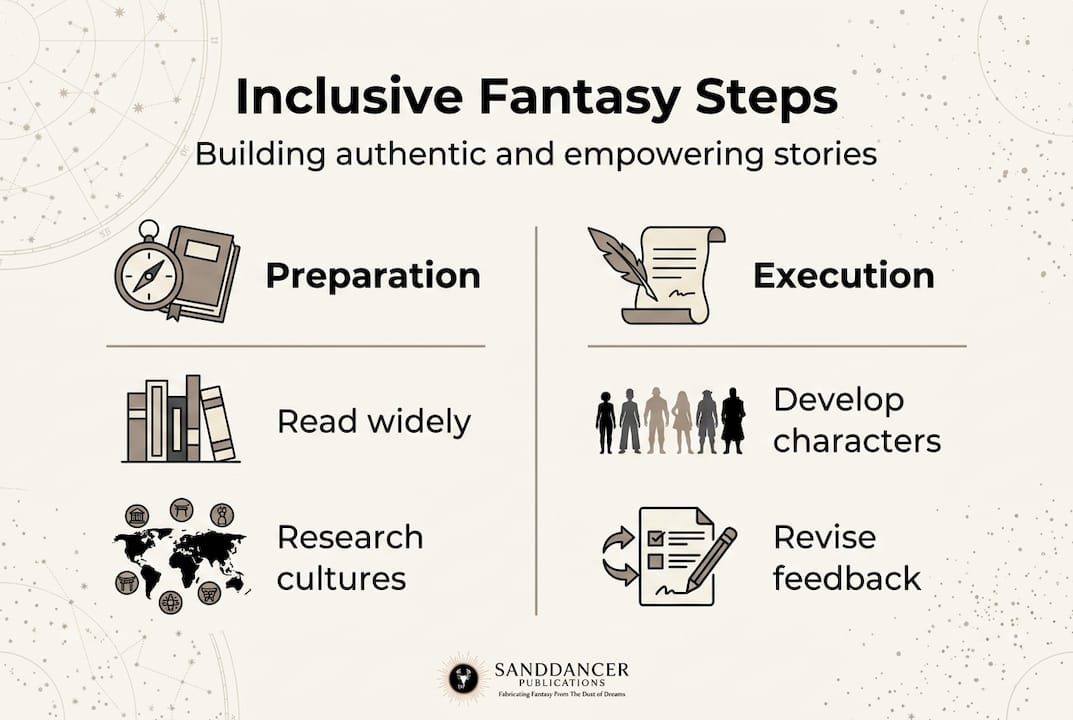
Sensitivity readers deserve a special mention. A sensitivity reader is a person from a specific community who reviews your manuscript for accuracy, respect, and potential blind spots. They're not there to police your creativity. They're there to help you not accidentally write something that unintentionally harms or misrepresents the people you care about including.
Pro Tip: Connect with horror and dark fantasy reader communities before you finish your first draft. Finding horror reader communities can put you in direct conversation with the audience you want to reach, and that kind of feedback is gold.
| Preparation practice | Why it matters |
|---|---|
| Reading diverse authors | Builds awareness of existing inclusive storytelling |
| Cultural research | Prevents erasure and misrepresentation |
| Community engagement | Grounds fictional worlds in real experience |
| Hiring sensitivity readers | Catches blind spots before publication |
The Raise the Dead Gothika novel is a great example of gothic fiction that takes its world seriously from the ground up. Use what you read as both inspiration and a kind of informal training.
Step-by-step process: writing inclusive narratives
Okay, you've done the prep. Now let's talk execution. Here's how to actually build inclusive dark fantasy stories, step by practical step.

Step 1: Identify whose perspectives are missing. Look at the genre conventions you love. Who gets to be the vampire lord? Who tells the ghost story? Who survives? Map the gaps. If every protagonist in your reading list looks and loves the same way, that's your first clue about where your own story can do something different.
Step 2: Develop authentic, diverse characters. This doesn't mean dropping a token character into an otherwise unchanged story. It means building people with interior lives, contradictions, desires, and histories that don't reduce them to their marginalized identity. The Blood Tithe Gothika novel does exactly this, giving characters real weight beyond their genre function.
Step 3: Build worlds without erasure. Worldbuilding is where cultural sensitivity really earns its keep. Avoid lifting real-world spiritual or cultural practices and slapping fantasy labels on them without understanding their roots. The folklore roots of horror run deep and deserve respect, not costume-store treatment.
Step 4: Challenge harmful tropes directly. This is where things get exciting. Avoid white savior tropes and use culturally sensitive magic systems. Subvert gothic tropes with diverse Byronic heroes who get to be complex, morally gray, and magnetic on their own terms.
Step 5: Revise with feedback from diverse readers. Your first draft is a conversation starter, not a final word. Bring in readers from the communities you've written about. Be ready to hear uncomfortable things and then do the work to fix them.
Pro Tip: The House of Cards supernatural novel shows how urban fantasy can center queer identity without reducing it to suffering. Read it as a craft study, not just a story.
| Approach | Less effective | More effective |
|---|---|---|
| Character diversity | One token character | Full cast with varied backgrounds |
| Magic systems | Borrowed real-world rituals | Culturally informed original systems |
| LGBTQ+ representation | Trauma as sole narrative | Agency, joy, and complexity |
Avoiding pitfalls: common mistakes in inclusive stories
Even writers who genuinely care about inclusion stumble. A lot. We've been there. Here's where things tend to go sideways and how to steer around it.
Tokenism is probably the most common mistake. It looks like adding one queer character, one character of color, and calling the story diverse. But if those characters exist only to support the white, straight protagonist's journey, you haven't written inclusion. You've written wallpaper.
Cultural insensitivity in plot devices is sneakier. It shows up when magic systems borrow from specific real-world traditions without understanding or crediting them, or when a character's culture is treated as flavor rather than foundation. This is where research and community engagement from your prep phase pay off.
Then there's the trauma trap. Challenge tropes like trauma-driven queer narratives, where LGBTQ+ characters only exist in the story to suffer, be killed, or serve as cautionary tales. That narrative pattern is exhausting for readers who live those identities, and frankly, it's also just lazy storytelling.
"The stories that stick are the ones where queer characters get to want things, fight for things, and sometimes even win things that have nothing to do with surviving their queerness."
Failing to revise with real feedback is the final big one. Writers sometimes treat sensitivity readers as optional or use their notes defensively. That's a missed opportunity. The diversity impact in fantasy is measurable, and readers notice when representation feels phoned in versus genuinely considered.
Measuring impact: how inclusive stories validate and empower
So you've written the thing. Now how do you know if it's actually landing for the readers you wanted to reach?
The most direct method is reader feedback, and not just star ratings. Look for responses where readers say they felt seen. Comments like "I've never read a character who feels like me" or "this story gave me permission to exist loudly" are your benchmarks. These aren't soft metrics. They're the whole point.
Empathy and belonging function as qualitative markers of impact. Inclusive stories make readers feel like the world of the story has room for them, not as a guest but as someone who belongs there. That sense of belonging is powerful, and it shows up in how readers talk about books in communities, reviews, and word-of-mouth recommendations.
The genre already has examples worth celebrating. Readers feel seen and validated in works by N.K. Jemisin and Nalo Hopkinson, authors whose genre-shaping books proved that dark, speculative fiction rooted in diverse experience doesn't just find an audience. It builds one.
| Impact indicator | What to look for |
|---|---|
| Reader reviews | Language of feeling seen or represented |
| Community discussion | Organic sharing among underrepresented groups |
| Author reach | Growing readership in LGBTQ+ and diverse spaces |
| Awards and recognition | Diversity-focused awards and literary recognition |
For women and LGBTQ+ readers specifically, feedback matters in a particular way. These readers have often spent years consuming stories where they're either invisible or killed off before the finale. A story that takes their full humanity seriously can be, without exaggeration, life-changing. The Gothika dark fantasy trilogy and the wider all gothic horror books collection offer a starting point for seeing this kind of impact in action. For a broader look at what's possible, the conversation around inclusive horror books is worth following.
A fresh perspective: challenging conventions in gothic fantasy
Here's something we feel pretty strongly about, and it might ruffle a few feathers. The dominant model for LGBTQ+ characters in gothic fiction has been suffering. Pain as identity. Trauma as character arc. And look, dark fantasy is dark. We're not saying everyone gets a happy ending with a cottage and a cat (though honestly, that sounds nice). But there's a difference between a story that includes hardship and a story that thinks hardship is all queer or marginalized characters deserve.
The writers who are reshaping the genre understand that embodied pleasure and agency can be just as transformative as any gothic tragedy. When a queer character gets to be powerful, sensual, and morally complicated without their identity being the source of their doom, that's a different kind of story. A better one. And readers feel the difference immediately.
We've learned from our community at SandDancer Publications that the stories people return to are the ones that give them something to want, not just something to survive. That's the shift worth making.
Discover inclusive dark fantasy books
If this guide has fired something up in you, whether you're a writer ready to dig in or a reader hungry to find stories that actually include you, we've got a place to start.
At SandDancer Publications, we're building a catalog of gothic and dark fantasy fiction that takes representation seriously without sacrificing the delicious darkness that makes this genre so addictive. Check out the House of Cards supernatural novel for a taste of how urban fantasy can center identity with real depth. Grab some free gothic fiction ebooks to explore the range. And if you want to go deep, the full gothika fantasy trilogy is waiting for you. Dark, inclusive, and completely unafraid.
Frequently asked questions
What makes a fantasy story truly inclusive?
Inclusive fantasy stories feature authentic, layered characters, culturally sensitive settings, and actively avoid tokenism or harmful genre tropes. Inclusion is a structural choice, not a cosmetic one.
How can writers avoid tokenism when writing LGBTQ+ or diverse characters?
Focus on building characters with full inner lives, contradictions, and goals beyond their identity, and always engage sensitivity readers and community voices before finalizing your manuscript.
Can inclusive stories in dark fantasy or gothic horror be empowering rather than traumatic?
Absolutely. Stories that emphasize agency and pleasure give marginalized characters room to thrive, not just survive, and readers consistently respond more deeply to that kind of representation.
What are sensitivity readers and how do they help?
Sensitivity readers are people from specific communities who review your draft for accuracy and cultural respect, helping you catch blind spots and stereotypes before your story reaches a broader audience.