

First 40 Pages That Hook: Indie Urban Fantasy Trends 2026
TL;DR: Urban fantasy in 2026 is blending with dark romantasy, expanding into workplace, metaphysical, rural, and small-town settings, and demanding stronger openings. Give readers a clear character goal, a visible emotional wound, and a satisfying mini-arc within the first 40 pages.
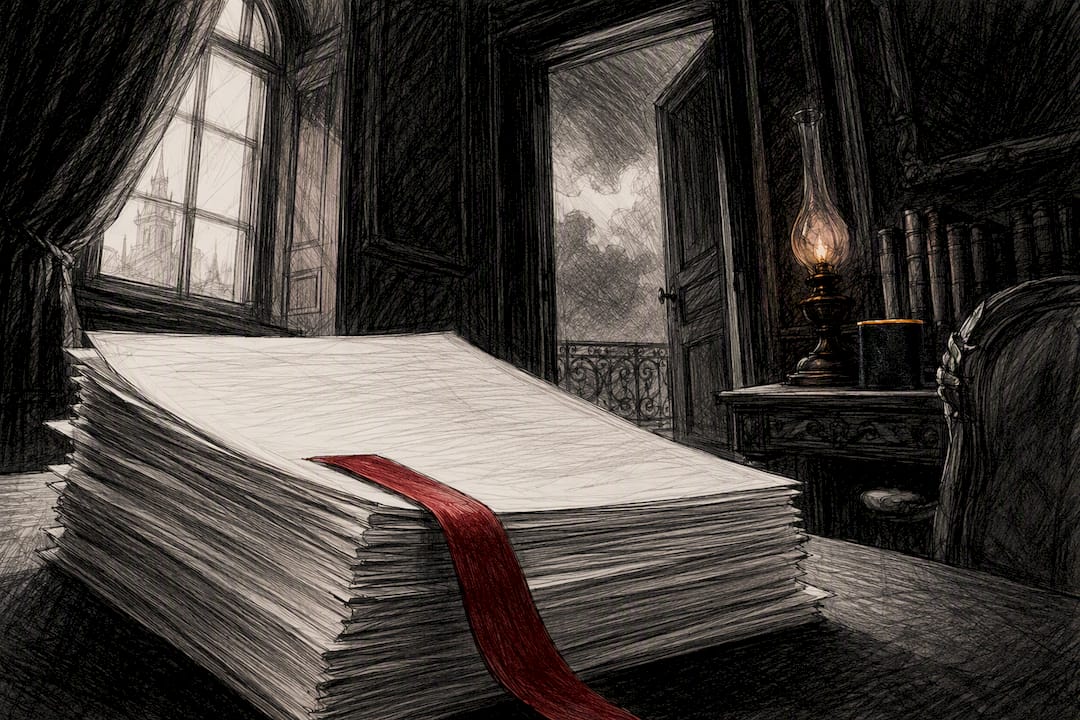
The three forces steering urban fantasy in 2026 are the collision with dark romantasy, a spread into workplace and metaphysical settings, and a reader attention span that punishes slow openings. Together they're reshaping what gets shelved as "urban fantasy" at all. We're C.S. Kading and Tony Fuentes, the writing duo behind SandDancer, and we've been tracking these shifts because they directly change how we build our own Gothika books.
What Are the Biggest Urban Fantasy Trends for 2026?
Here's the honest version: urban fantasy didn't disappear, it just got absorbed into bigger, messier categories. BookTok didn't invent this shift, but it sure poured gasoline on it. Reader-behavior research shows DNF thresholds have compressed hard, with a huge chunk of abandonments happening before page 40. If your hook doesn't land fast, readers bail, and they bail publicly, on video, with a caption.
At the same time, PublishDrive's market analysis points to a mid-decade tilt toward darker romantasy and paranormal romance, with predictions that 2026 and 2027 will keep pushing into new settings. Jane Friedman's coverage of the shelf shake-up notes that dark romance and its cousins are being reclassified in ways that make old-school urban fantasy look smaller on paper, even when reader appetite hasn't actually shrunk. It just got relabeled.
Why the pull toward morally complex factions and gray-zone protagonists? Tools like AI-driven roleplay fantasies show how creators use AI to explore complex character dynamics and scenarios, inspiring new approaches to morally gray storytelling. Partly because readers are using these worlds to process real power dynamics. The Guardian's reporting on romantasy's popularity argues that magical-kingdom storytelling functions as allegory for gender relations and social hierarchy, which explains why factional supernatural politics resonate more than a single rogue vampire ever did.
Three things are driving the 2026 landscape:
- Shorter reader patience windows, forcing earlier emotional payoff
- Category blending that rewards romantasy-coded covers and copy
- A hunger for institutions and systems over lone-wolf monsters
The number that matters: Industry data compiled across the genre shows urban fantasy still holds meaningful digital-format strength, even as classification labels shift underneath it. The audience is there. The shelf label is just catching up.
Three Trend Deep Dives Every Author Should Know
1. The dark romantasy overlap
This isn't your 2012 paranormal romance. Dark romantasy raises the emotional stakes and often blurs the line between love interest and antagonist. Deadline Dames' analysis argues romantasy has fundamentally restructured how paranormal romance gets marketed, and predicts it'll dominate speculative romance shelves for years. What changes for your protagonist? Goals get personal before they get political. Readers want the romance to raise the danger, not soften it.
2. The workplace and metaphysical pivot
Instead of a lone hunter stalking one monster through back alleys, 2026 readers are gravitating toward institutions: bureaucratic underworlds, office politics among witches, afterlife systems with HR departments. A trend essay on emerging subgenres calls this the rise of office witches and metaphysical noir, where the monster isn't a creature, it's a broken system with rules your character has to learn or break. It's a great gift for plotting, honestly. Institutions come pre-loaded with conflict, hierarchy, and betrayal potential.
3. Solarpunk, rural, and small-town expansion
"Urban" is becoming a mood more than a map. Rural magic, small-town covens, and greener, sun-drenched settings are pulling readers who want the genre's bones (hidden supernatural society, personal stakes, moral gray zones) without the neon-and-rain aesthetic that defined the 2000s. The same trend essay on 2026 subgenres flags rural urban fantasy as one of the fastest-growing "vibes" in the space, right alongside metaphysical noir.
Pro Tip: Pick your setting's "system" before you pick your monster. Whether it's an office, a small town, or a sunlit commune, decide what rules govern the supernatural community first. The monster is easy. The bureaucracy is the story.
How Should Authors Write for These 2026 Trends?
Readers trained on short-form video expect what researchers call payoff architecture: a hook, an emotional gut-punch, and a mini-arc that resolves fast enough to satisfy even if they stop reading. BookTok Times' reader research backs this up directly, tying the compressed DNF window to a demand for early narrative reward. Practically, that means your first chapter needs a clear want, a visible obstacle, and some kind of emotional resolution by page 40, even if the big plot hasn't started yet.
Morally gray leads are everywhere right now, but the ones that work share one trait: their bad behavior traces back to a specific wound. Research on 2026 reader preferences notes that audiences will forgive a lot from a flawed character as long as the motive arc stays legible. Vague brooding doesn't cut it anymore. Show us why he's like this.
You'll also need to make a hard call early: how does magic interact with modern tech? Deepfakes, security cameras, and online paper trails have made the old "nobody would ever believe you" masquerade trope creak under scrutiny. Decide your rules on page one of your outline, not page one of revisions.
- Build a visible wound behind every gray-morality choice
- Lock in your magic-versus-technology rules before drafting
- Give readers a resolved mini-arc within the first 40 pages
We leaned on exactly this approach while shaping Tenebroso, and it shows up across our gothic fantasy themes guide and our immersive dark fantasy settings post.
Readers don't need your antagonist to be likable. They need to understand exactly why he became this way, and they need that understanding delivered before they've decided to close the book.
How Should Indie Authors Adapt Their 2026 Strategy?
Let's get tactical, because knowing the trends and acting on them are two very different things.
- Tighten the opening hook. Cut anything before the inciting want. If your protagonist doesn't have a visible goal by the end of chapter one, move things up.
- Build in an early emotional payoff. Give readers a small, satisfying resolution (a confession, a reveal, a fight won or lost) within the first 40 pages, even while the main plot simmers.
- Make the wound visible. Every questionable choice your lead makes should trace back to something readers can name by act two.
On the marketing side, three moves matter most right now. First, look for a scene that's naturally quotable or clippable, something with a twist line or a visual beat, because that's your BookTok moment. Second, use PublishDrive's discoverability research as a cue: category and cover choices that lean romantasy can open up bigger reader pools than a strict urban fantasy label. Third, time your ARC releases so reviews land in the two weeks before launch, when algorithmic visibility spikes hardest.
Pro Tip: Your cover doesn't need to lie about your genre, but it can flirt with adjacent shelves. A moody, romance-coded cover on a book with real teeth will pull in readers who'd never have clicked an old-school urban fantasy design.
Where Urban Fantasy Blends With Thriller and Horror
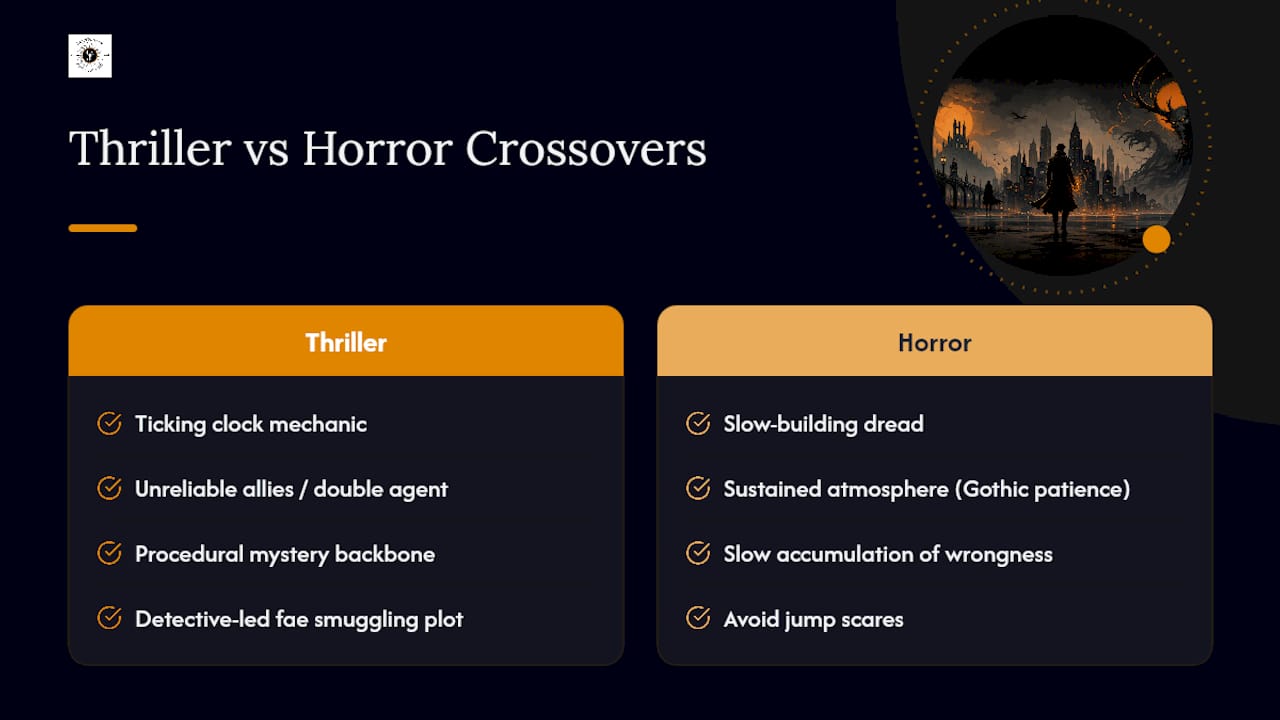
Romantasy isn't the only direction the genre is stretching. A growing slice of 2026 urban fantasy borrows structure straight from thrillers: ticking clocks, unreliable allies, and procedural mysteries where the detective just happens to be tracking a fae smuggling ring instead of a human trafficker. The bones are the same. The stakes just got teeth.
Horror crossover is doing something different. Instead of jump scares, it's leaning into dread, the slow accumulation of wrongness that makes a reader's skin crawl page by page. That's squarely SandDancer territory, honestly. Gothic horror has always known how to build atmosphere without rushing to the reveal, and we're seeing more urban fantasy writers borrow that patience instead of front-loading every twist.
What makes this cross-pollination work is specificity. A thriller-flavored urban fantasy needs an actual ticking clock, not just vague dread. A horror-flavored one needs sustained atmosphere, not one spooky chapter followed by business as usual. Readers can tell when a genre blend is a marketing label versus a structural choice, and 2026's more sophisticated audience rewards the latter.
If you're experimenting with a blend, pick one structural device from the other genre and commit to it fully rather than sprinkling flavor on top. A single strong thriller mechanic (a countdown, a double agent, a piece of evidence that keeps resurfacing) does more work than five scattered horror-adjacent images.
Who's Shaping the 2026 Urban Fantasy Scene
The biggest shift isn't one breakout author, it's the sheer number of indie writers publishing directly into these blended spaces without waiting for a traditional imprint to bless the category. Digital-first publishing has made urban fantasy's format strength a real advantage, and industry data confirms the genre performs disproportionately well in ebook formats compared to some traditional fantasy subgenres.
That digital-first reality means indie authors experimenting with workplace fantasy, metaphysical noir, and rural magic are reaching readers faster than the traditional pipeline can categorize them. Recognition is following too. Awards have increasingly gone to independent dark fantasy and gothic horror work that traditional publishing might have passed over a decade ago, a sign that gatekeeping around "legitimate" urban fantasy has loosened considerably.
We'd love to tell you there's one name to watch, but that's not how this moment works. The scene is being shaped by dozens of small-press and self-published authors testing rural covens, office-politics witches, and afterlife bureaucracies simultaneously, comparing notes on BookTok, and iterating fast. If you're an indie author reading this, you're not watching this trend from outside. You're part of the group writing it.
An Editor's Honest Take on Where Urban Fantasy Is Headed
We tested an early version of a wound-driven antagonist arc while revising a Tenebroso subplot, and it forced us to cut a scene we loved because it explained the character's motive too late. Losing that scene stung, but the pacing improved instantly. That's the trade-off these 2026 trends demand: less patience for slow reveals, more reward for structural discipline.
What we're testing next is pacing inside dialogue-heavy scenes, seeing how much emotional payoff we can front-load without rushing the atmosphere gothic horror depends on. We're genuinely curious what fellow creators find.
— C.S. Kading & Tony Fuentes
SandDancer Titles That Already Live These Trends
You don't have to guess what dark romantasy and morally complex leads look like on the page. Reading them in action beats any trend breakdown, and some catalogs are built around exactly the tensions this article covers: gray-zone characters, institutional supernatural threats, and settings that reward patience without losing momentum.
If you want the dark romantasy overlap in motion, Blood Tithe puts a morally compromised bargain at the center of its stakes, and the signed edition makes a solid gift for readers who collect. For the metaphysical and setting-diversification trend, Tenebroso is our flagship example of folklore colliding with a system bigger than any single monster, also available as a signed edition. And if you want to see where a series can go once the world gets fully institutionalized, End of the Line shows the payoff of that long-game worldbuilding. Ebooks start at $0.99 through the Gothic Dark Fantasy Ebooks storefront, or browse the full lineup on the Realm of Gothika series page to pick your own entry point.
Sources
- Romantasy: How Romance-Fantasy Books Dominate the Book Market in 2026
- Why magical kingdoms feel more relatable than real-world romance for today's young women
- The Complete Guide to What Readers Actually Want in 2026 – BookTok Times
- Book sales update: dark romance trending
- 130+ Fantasy Publishing Industry Statistics | Verified 2026
FAQ
What Genre Is Replacing Traditional Urban Fantasy in 2026?
Nothing is replacing it outright. Dark romantasy and metaphysical noir are absorbing a lot of the shelf space and marketing language, while classic urban fantasy tropes persist inside those newer labels.
Why Are Readers Abandoning Books Faster in 2026?
Compressed attention spans trained by short-form video mean many readers decide within the first 40 pages whether a book earns their time, according to BookTok Times' reader research. Early emotional payoff has become a structural requirement, not a nice bonus.
Should I Market My Book as Urban Fantasy or Romantasy?
It depends on your plot's center of gravity. If romance drives the stakes, leaning into romantasy-coded categories and cover cues can widen your discoverability, per PublishDrive's analysis.
Does SandDancer Publish Books That Reflect These 2026 Trends?
Yes. Titles like Tenebroso and Blood Tithe center morally complex leads and institutional supernatural settings, both hallmarks of where the genre is heading in 2026.
How Do I Handle Magic and Modern Technology in My Story?
Decide early how your magic system survives smartphones, security cameras, and deepfakes, since vague hand waving breaks reader trust fast. Codify the rule in your outline before you draft the scene where it matters.