

Gothic Fantasy Themes: A How-To Guide for Readers and Writers
TL;DR:
- Gothic fantasy evokes deep emotional responses through themes like confinement, decay, and the divided self, influenced by diverse traditions.
- Crafting atmospheric, liminal settings and intentionally layering or subverting tropes deepens its psychological impact for modern, inclusive storytelling.
- Marginalized voices find empowerment by redefining gothic archetypes, revealing the genre’s roots in confronting society’s uncomfortable truths.
Gothic fantasy has this incredible, maddening quality where you can feel its pull in your bones before you can actually name what it is. That shadowy corridor. The crumbling estate. The character who is simultaneously the monster and the victim. If you’ve ever tried to write gothic fantasy or just read it more intentionally, you know the frustration of loving something deeply while struggling to articulate exactly why it works. This guide is for you, especially if you’re a woman, a queer reader, or anyone who’s felt like traditional gothic narratives weren’t quite built with you in mind. We’re going to break it all down, practically and honestly.
Key Takeaways
| Point | Details |
|---|---|
| Essential gothic themes | Identify foundational motifs like inheritance, decay, transgression, and psychological fragmentation. |
| Atmospheric settings | Craft ambiguous, liminal environments to enhance emotional impact and resonance. |
| Modern trope layering | Subvert and combine classic tropes for richer, more inclusive narratives. |
| Avoid common pitfalls | Steer clear of stereotypes and clichés by deepening psychological and intersectional complexity. |
| Empower marginalized voices | Use gothic fantasy themes to highlight agency and representation for women and LGBTQ individuals. |
Identify Core Gothic Fantasy Themes
Before you can play with gothic fantasy, you need to know what’s actually in the toy box. The good news is that gothic fiction has been doing its dark, brooding thing for centuries, so there’s a lot to work with. Core gothic themes include inheritance and family legacy, madness and psychological fragmentation, isolation and confinement, the double or divided self, guilt and moral transgression, death, decay, and the passage of time. That’s already a rich list, and any one of those could anchor an entire novel.
There are also nine recurring gothic elements worth knowing: chiaroscuro (that dramatic light/dark contrast you see in every gothic painting ever), regionality, religiosity and the spirit realm, inheritance, the house as a horror site, tension between convention and desire, the sublime, monstrosity, and taboo. Think of these as your gothic seasoning rack. You don’t dump all of them into every scene, but knowing they’re there helps you make deliberate choices.
Here’s where it gets especially interesting for our community. Gothic fiction has never been one single voice. Female Gothic, associated with writers like Ann Radcliffe, focuses on confinement, interiority, identity, and the heroine navigating a world that constrains her. Male Gothic, associated with writers like Matthew Lewis, tends toward epic transgression and outward tragedy. And then there’s Queer Gothic, which layers desire, identity, and power dynamics onto those existing frameworks in ways that feel urgent and alive right now. Knowing which tradition you’re drawing from, or consciously mixing, shapes every decision you make as a reader or writer. You can explore dark fantasy conflict through any of these lenses, and the results are wildly different.
Pro Tip: If you’re just starting to develop your own gothic story, pick two or three themes from the core list and ask yourself which gothic tradition (Female, Male, or Queer) most resonates with your protagonist’s experience. That alignment will make your thematic choices feel cohesive rather than scattered.
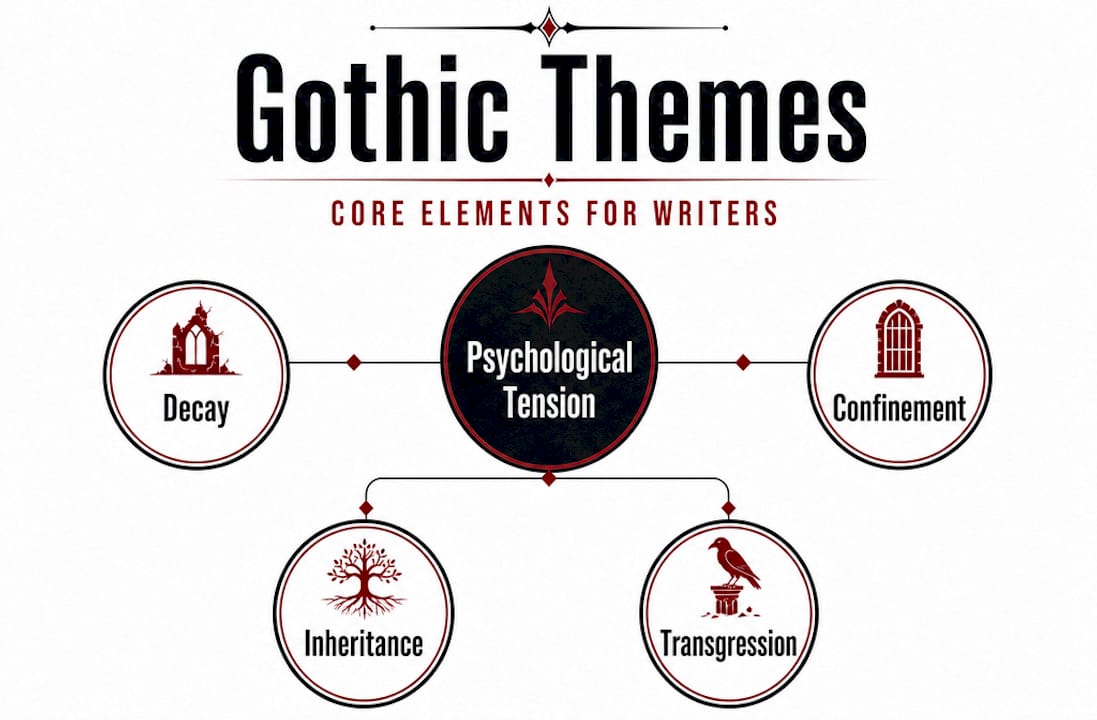
Here’s a quick comparison to make this concrete:
| Theme | Female Gothic Example | Male Gothic Example | Queer Gothic Example |
|---|---|---|---|
| Confinement | Heroine trapped in estate | Villain imprisoned by guilt | Identity suppressed by society |
| The double | Split internal identity | External monstrous alter ego | Public vs. private queer self |
| Transgression | Breaking social norms quietly | Spectacular, punished defiance | Desire as radical act |
| The house | Domestic prison | Site of sin and ruin | Space of hidden queer life |
Reading the table, you can already see how the same theme produces completely different stories depending on whose experience you center. That’s the magic of gothic fantasy.
Prepare Your Gothic Fantasy Setting
Having defined essential themes, the next step is crafting evocative settings for your gothic fantasy. Setting in gothic fiction is never just backdrop. It’s practically a character itself, and it does a huge amount of emotional heavy lifting.

Gothic settings emphasize ambiguity and in-betweenness, and the concept of liminal spaces, those porous borders between life and death, self and other, is central to why gothic atmospheres feel so unsettling. A decaying estate isn’t just spooky because it’s old. It’s unsettling because it represents something that should be gone but isn’t quite. The threshold between inside and outside, past and present, safe and dangerous. Castles, abandoned asylums, fog-drenched moors, crumbling graveyards, cities that feel older than they should: these settings work because they put characters (and readers) in a state of unresolved tension. Nothing is quite solid. Nothing is quite safe.
Real gothic settings you might draw inspiration from include Bran Castle in Romania, the Louisiana bayou, Victorian London’s dense and gaslit streets, or the American South with its weight of history and heat. Fictional standouts include Hill House from Shirley Jackson’s novel, Gormenghast from Mervyn Peake’s series, and Manderley from Daphne du Maurier’s Rebecca. What they all share is a sense that the place knows things. The architecture and geography reflect the psychological state of the characters inside them. For writers building immersive gothic settings, this connection between outer landscape and inner life is where the real craft lives.
If you enjoy games that nail this atmosphere visually, it’s also worth looking at how atmospheric settings work across creative media for fresh inspiration on translating gothic mood into tangible, constructed spaces.
Here’s a handy reference for setting elements and what they evoke:
| Setting Element | Atmospheric Effect | Thematic Association |
|---|---|---|
| Decaying estate | Dread, nostalgia | Inheritance, legacy |
| Fog or mist | Disorientation | Ambiguity, liminality |
| Locked rooms / hidden passages | Curiosity, danger | Secrets, transgression |
| Overgrown gardens | Loss, time’s passage | Decay, natural reclamation |
| Candlelit interiors | Intimacy, vulnerability | Psychological fragmentation |
| Cliffs and storm-dark seas | Sublime terror | The uncontrollable, sublime |
Understanding the gothic elements in literature that each location choice triggers helps you build settings that resonate emotionally rather than just visually.
Pro Tip: Layer your physical and psychological atmosphere intentionally. If your protagonist is experiencing internal fragmentation, let the setting literally fragment around them. Cracks in walls. Mismatched rooms. Mirrors that reflect wrong. The setting should be doing thematic work on every page, not just the establishing scene.
Layer and Subvert Gothic Tropes for Modern Impact
Once your setting is in place, it’s time to deepen your story using tropes and creative subversions. Gothic fiction is absolutely loaded with tropes, and that’s not a problem. It’s actually an opportunity.
Gothic fiction centers on transgression against the natural or social order and explores the human cost of that transgression. Key elements include the Byronic hero (charismatic, brooding, morally compromised), dark pasts that refuse to stay buried, subverted romance, secret oaths, and forbidden knowledge. These are the classic building blocks. The question isn’t whether to use them. It’s how to use them in ways that feel fresh and intentional rather than recycled.
Here’s a practical process for layering gothic tropes with modern depth:
First, pick your core trope and commit to it fully. Don’t hedge. If you’re using the isolated woman in a dangerous house, lean into that premise completely so the reader feels its claustrophobic weight. Second, identify who traditionally holds power in that trope and then deliberately interrogate it. The isolated woman becomes far more interesting when she’s not waiting for rescue but actively investigating the danger. She becomes extraordinary when her “madness” is revealed to be perception rather than pathology. Third, add a second or third trope that creates tension with the first. A forbidden romance layered onto the isolation trope creates agency and desire where there was only confinement. A monstrous other who is also the most empathic character in the story destabilizes the entire moral framework.
Ambiguity is essential in gothic fiction, particularly the tension between real and imagined supernatural events. Psychological depth externalizes internal states, and the concept of abjection, that feeling of something disturbing identity and order, is where the most powerful gothic storytelling lives. The best gothic narratives make you genuinely unsure whether the horror is external or internal, and that uncertainty is what keeps readers up at night.
“The gothic doesn’t just want to scare you. It wants to make you wonder what you’re actually afraid of, and why.”
For our LGBTQ readers and writers especially, the monstrous other trope is incredibly fertile ground. Historically, gothic fiction coded queer desire as monstrous. Vampires, doubles, creatures of the night: these figures carried coded meanings that queer readers recognized even when mainstream audiences didn’t. Subverting this means reclaiming those figures as protagonists, as subjects with desire and agency rather than objects of horror. For writing gothic fantasy with genuine inclusive depth, this reclamation is not just politically meaningful. It produces better, more emotionally complex stories.
Pro Tip: For LGBTQ and female writers especially, the most powerful subversion often comes from taking the trope’s built-in tension and redirecting it. Instead of desire being punished, let it be transformative. Instead of the heroine being confined by the house, let her learn to weaponize it. Crafting gothic conflict with this redirected energy produces narratives that feel genuinely urgent.
Troubleshooting and Avoiding Gothic Fantasy Pitfalls
Before finalizing your gothic fantasy, review potential pitfalls to ensure your themes achieve intended depth and impact. Even experienced writers can slip into traps that undermine everything they’ve carefully built.
The most common pitfall is the clichéd damsel. She’s locked in a tower, terrified, waiting. She has no interiority, no agency, no reason to exist in the story beyond being endangered. This is a lazy use of the Female Gothic tradition. Female Gothic was actually built around exploring feminine experience, confinement, identity, and interior life in ways that Male Gothic rarely bothered with. The damsel is a corruption of that tradition, not its natural expression. The fix is to give her a perspective, a desire, and a specific form of knowledge or power that the narrative actually respects.
Another common trap is using marginalized identities as shorthand for “otherness” without giving those characters full psychological lives. Queer characters who exist only to be tragic, characters of color who exist only to be mysterious or sacrificial: these choices flatten what could be genuinely complex representation. The inclusive storytelling guide principle here is simple: every character, regardless of their identity, deserves an inner life that the story takes seriously.
Psychological authenticity is also where many gothic stories stumble. Madness in gothic fiction is a theme with real weight. Using mental illness as atmosphere or decoration, without understanding the lived experience it represents, reads as shallow and can genuinely harm readers who see their experiences trivialized. The solution is to treat psychological states with the same specificity you’d give any other worldbuilding element. What does this character actually experience? How does it affect their relationships and choices? What does the narrative ultimately say about their state of mind?
Pro Tip: To troubleshoot emotional resonance in your gothic work, ask yourself: “Whose suffering does this story take seriously, and whose does it use as scenery?” If you can’t answer that the suffering of your marginalized characters is treated with as much care as your central protagonist’s, you have revision work to do.
Why Subverting Gothic Fantasy Themes Empowers Marginalized Voices
With practical tools and troubleshooting covered, let’s reflect on what makes modern gothic fantasy distinctly powerful for today’s diverse readers.
Here’s our honest take: the traditional gothic was never neutral. Traditional Male Gothic punishes transgression tragically, Female Gothic critiques confinement and empowers heroines in quieter but no less radical ways, and modern Queer Gothic adds layers of desire and power dynamics that speak directly to the experiences of readers who have always been on the margins of the stories they loved.
When you subvert a gothic trope as a marginalized writer or reader, you’re not just making a craft choice. You’re making a claim about who gets to be at the center of dark, psychologically rich fiction. And that matters enormously. We’ve seen it in the work we publish and love at SandDancer: the stories that hit hardest are the ones where the protagonist’s marginalized identity isn’t their obstacle. It’s their lens. Their power. The thing that gives them access to truths the world around them refuses to see.
The gothic has always been about what society refuses to look at directly. Queerness, feminine rage, inherited trauma, the violence of “respectable” institutions. These aren’t additions to gothic fiction. They were always its secret beating heart. Modern gothic that centers marginalized voices isn’t rewriting the genre. It’s finally telling the truth about what the genre was always about.
Take Your Gothic Exploration Further with SandDancer Books
If this guide has you ready to sink deeper into gothic fantasy, we have something you’re going to love.
 SandDancer Publications exists exactly for readers and writers who want gothic fiction that doesn’t hold back. Our catalog includes award-winning novels built on the themes and techniques we’ve covered here. Blood Tithe and Raise the Dead are both part of our Gothika series, rich with the psychological depth, liminal atmospheres, and morally complex characters that gothic fantasy does best. And if you want to test the waters first, we’ve got free gothic fiction ready to read right now. No commitment, just great dark storytelling waiting for you.
Frequently Asked Questions
What defines a gothic fantasy theme?
Gothic fantasy themes weave together psychological tension and transgression with motifs like inheritance, decay, confinement, and the divided self to create emotionally charged, morally ambiguous narratives. The genre distinguishes itself by treating setting, psychology, and darkness as inseparable forces.
How do Female Gothic and Queer Gothic differ from traditional themes?
Female Gothic centers interiority, identity, and the critique of confinement, while Queer Gothic explores desire, identity, and power dynamics that traditional Male Gothic rarely engaged with seriously. Both traditions push back against the punishment of transgression that defines the conventional gothic.
What setting elements are most impactful in gothic fantasy?
Liminal spaces like castles and decaying estates are most impactful because they externalize psychological ambiguity, placing characters in environments that feel simultaneously familiar and threatening, alive and dying.
How can I modernize gothic tropes for inclusive storytelling?
Layer tropes for psychological depth by subverting who holds agency and desire, centering the experiences of characters traditionally coded as “other,” and allowing transgression to transform rather than simply destroy.
Recommended
- Essential Tips for Writing a Dark Fantasy Novel with Gothic Flair – SandDancer Books
- Step-by-Step Guide to Inclusive Dark Fantasy Storytelling – SandDancer Books
- How to Edit Dark Fantasy Manuscripts for Vivid Gothic Storytelling – SandDancer Books
- Gothic Elements in Literature for Deeper Storytelling – SandDancer Books
- Best Gothic Block Harmony for Atmospheric… | Gaia Legends